
When Edmonton offices switch to sealed heating for the long winter, dust and allergens do not disappear—they concentrate. Dry air, foot traffic, and hours with windows closed mean particles that were barely noticeable in September can trigger coughs, itchy eyes, and “mystery” complaints about air quality by November.
For facility managers, reducing dust and allergens is not a one-time deep clean. It is a combination of source control, the right commercial cleaning methods, and HVAC-aware maintenance that keeps occupants comfortable without over-sanitizing every surface.
Why Edmonton offices feel “dusty” in fall and winter
Several local factors stack up:
- Forced-air heating lowers relative humidity, so lighter particles stay airborne longer and static clings dust to screens, blinds, and carpet.
- Less natural ventilation means outdoor flush periods are rare; whatever enters on coats and boots stays inside.
- Construction and road grit from summer projects and fall maintenance often linger in ceiling tiles, supply vents, and carpet backing until disturbed.
- Mixed sensitivities in open-plan and multi-tenant buildings—fragrance, pets on clothing, and seasonal allergies all show up as cleaning complaints rather than medical diagnoses.
The goal is measurable improvement: fewer visible surfaces coated in film, less re-dusting overnight, and fewer occupant reports—not a sterile environment.
Source control: what janitorial cannot fix alone
Professional office cleaning handles accumulated soil; source control limits how fast it returns. Facility teams can:
- Walk-off matting at every entrance (scraping, absorbing, and holding moisture before it reaches carpet).
- Encourage coat storage away from workstations so outerwear dust does not shed onto chairs and keyboards.
- Replace or upgrade HVAC filters on schedule (MERV rating matched to equipment—your mechanical contractor should approve changes).
- Seal obvious air leaks around windows and doors that pull in outdoor particulate.
- Manage renovation dust with barriers, negative air if required, and extra cleaning scope during active trades work.
Share your filter-change calendar with your janitorial partner so heavy dusting visits can align with post-filter-change “surges.”
High-impact cleaning priorities for dust and allergens
Not every task reduces allergens equally. In commercial buildings, prioritize:
High and forgotten horizontal surfaces
Dust settles upward on tops of partitions, ledges, picture frames, and elevator cab ceilings. Include high dusting on a defined frequency—not only when someone complains.
Carpet and soft surfaces
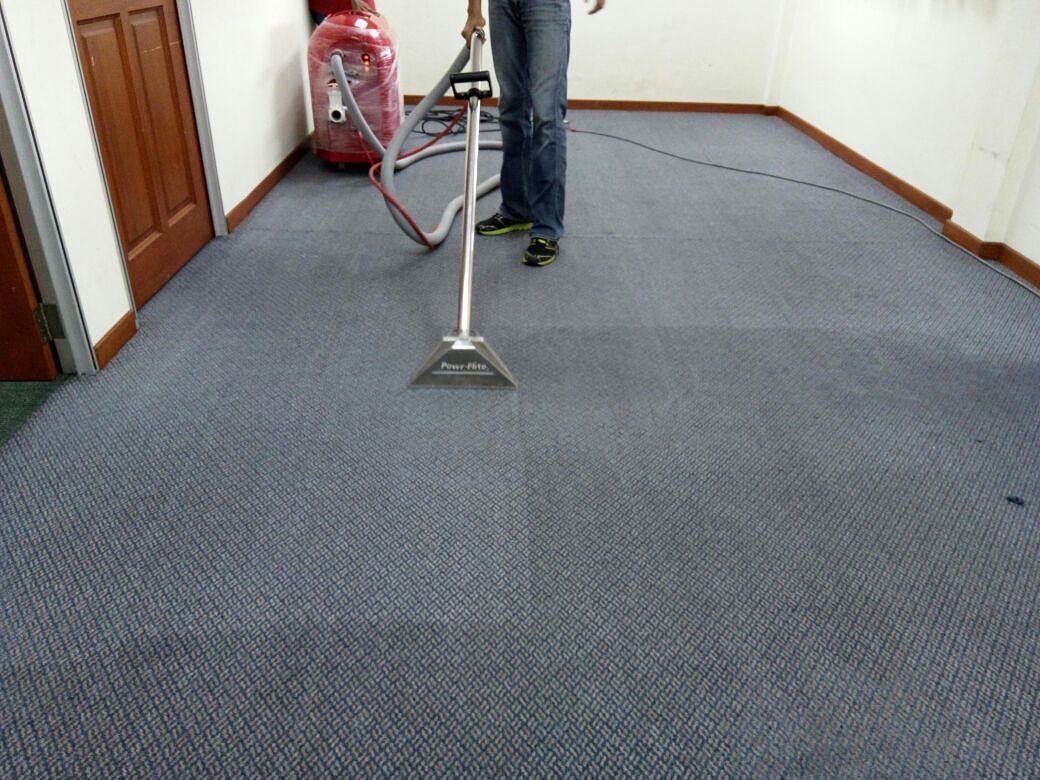
Vacuuming with HEPA-filter equipment on traffic lanes and under desks captures fine particulate that standard vacuums recirculate. Professional carpet cleaning on a planned cycle removes embedded grit that daily vacuuming cannot; frequency depends on traffic.
Hard floors
Dry mopping or microfiber dusting before wet cleaning prevents spreading fine particles into grout lines. Avoid oily or sticky residues that attract more soil.
Upholstered furniture and fabric panels
Vacuum with appropriate attachments; spot clean without saturating foam that may grow mould if it stays damp in a closed building.
Blinds, vents, and diffusers
Dust on supply grilles blows back into the room when heat cycles on. Wipe accessible diffusers during scheduled cleans; coordinate full duct cleaning with HVAC vendors when inspections recommend it.
Products and methods that help (and what to avoid)
For commercial cleaning in Edmonton, allergen-focused programs often emphasize:
- Microfiber for dusting and damp wiping (captures and holds particles instead of redistributing them).
- HEPA vacuums where budget and scope allow.
- Low-fragrance or fragrance-free products when occupants report sensitivities.
- Controlled moisture—over-wet mopping on carpet or excessive spray on electronics creates new problems.
Avoid “more chemical equals cleaner” thinking. Heavy fragrances and unnecessary aerosols can worsen perceived air quality even when surfaces look shiny.
Flu season, disinfection, and dust
During cold and flu season, teams sometimes over-focus on disinfecting desks while neglecting dust removal. Disinfectants work best on pre-cleaned surfaces. A practical split:
- Daily or nightly: high-touch points in shared areas, restrooms, break rooms.
- Scheduled: thorough dusting, carpet care, and detail work that actually lowers particulate load.
That balance supports both infection prevention and allergen reduction without burning labour on low-value wipe-downs.
How to measure improvement
Facility managers do not need a lab to track progress:
- Complaint log by floor and season (before/after scope changes).
- Visual standards on a short walkthrough checklist (vents, ledges, glass, carpet edges).
- Vacuum bag or canister checks during QA visits (fine grey dust vs large debris tells a story).
- Tenant feedback after filter upgrades or carpet cleaning cycles.
Document what changed so you can repeat what worked next winter.
Working dust and allergen control into your janitorial contract
When scoping janitorial services, ask for:
- Explicit high-dusting and HEPA vacuum language where needed.
- Carpet and hard-floor frequencies tied to traffic zones, not one blanket schedule.
- Product list with low-fragrance options and SDS availability.
- Quality assurance walks that include particulate hotspots, not only trash and restrooms.
Bluebird Janitorial builds customized cleaning plans for Edmonton offices, clinics, and multi-tenant buildings—with quality assurance visits to keep scope aligned with how the building actually performs in winter.
Bottom line
Reducing dust and allergens in Edmonton office buildings is a winter-long program: better filtration and matting at the source, targeted commercial cleaning that captures fine particulate, and realistic disinfection priorities during flu season. Facility managers who treat particulate control as part of scope—not an extra only when someone sneezes—get fewer air-quality complaints and healthier-looking spaces through the heating season.
Need help tightening dust and allergen control in your workplace? Contact Bluebird Janitorial today for a free quote. Call 780-458-7825 or request a quote online — we will walk your space with you and recommend a janitorial plan that fits your building and occupancy.